From three-point lighting to motivated setups, here is everything you need to know about lighting placement and schemes.
Top image via Warner Bros.
Lighting is an integral part of cinematography, and it’s one of the few areas of filmmaking that has infinite arrangements of setups. Like camera terminology, there are many variations of tools and lighting language. In short, it can get confusing.
There is no one right way to employ lighting design. A scene could be lit several different ways by different cinematographers, each altering the mood and overall impact of the image. However, there is a basic list of lighting placement.
Below is a list of primary light placement terminology and the key points for that placement. It’s important to note that there can be several terms for the same placement. For example; A backlight, rim light, and a hair light are interchangeable terms for having the light placed behind and above an actor.
Key Light
A key light is the primary light of the scene. It will be the most intense and direct light source of the entire scene. It will be the first light to set up and be used to illuminate the form of the subject or actor.
Key Points:
- Avoid placing your key light close to the camera. It will cause your lighting to become flat and featureless.
- If a key light is positioned to the side or back of an actor, it will create a mysterious/dramatic mood, and overall keep the image dark.
- A key light is the primary light in a three-point lighting setup.
Fill Light
A fill light illuminates the shadows that are created by the key light. Fill light is usually placed on the opposite side of the key light and is often not as powerful as the key.
Key Points:
- As the primary function of the fill is to remove shadows created by the key, it’s important that the fill remains indistinctive and does not create shadows or it’s own characteristics. The closer the fill light is to the camera, the less shadows it will create.
- Fills are easy to create even if you don’t have another light at hand; you can place a reflector on the opposite 3/4 to the key. Light will spill onto the reflector and bounce up to your subject.
- A fill light is measured in a fill light ratio also known as a key/fill ratio. It describes the relative amount of light from the key and the fill. For example, a ratio of 1:2 would indicate that the fill is half the intensity of the key.
Back Light
A backlight hits an actor or object from behind and is usually placed higher than the object it is lighting. A backlight is often used to separate an object or an actor from a dark background and give the subject more shape and depth. Backlighting can help bring your subject out and away from looking two-dimensional.
Key Points:
- Non-diffused sunlight can often be too harsh to light your subject as a key light, but as a backlight, the sun can make your subject stand out.
- With the sun as a backlight, you can use a reflector or a foam board to bounce the sun at a lesser intensity back up to the actor.
- To create a silhouette, expose for the backlight and remove your key and fill.
- If a backlight is placed behind an actor at a directional angle, where the light hits part of the face, the backlight becomes a kicker.
- A great affordable backlight is the ARRI 150.
The key light, fill light, and the backlight makes up a three-point lighting setup. You can learn more about setting up a three-point lighting scheme in this video tutorial from Full Sail University.
Sidelight
 Image: Casino Royale via Columbia Pictures
As you might have guessed, a sidelight is a light that comes from the side parallel to the actor. A sidelight is ideal for creating a dramatic mood and chiaroscuro lighting. Chiaroscuro is created with low-key and high-contrast—a traditional technique employed throughout the film noir period of cinema.
Key Points:
- To create better dramatic lighting with a sidelight, it is best to use it without a fill or have the fill ratio very low such as 1:8.
- Sidelights are ideal for revealing texture.
Practical Light

Image: Goodfellas via Warner Bros.
A practical light is an actual working light within the scene itself. This can be a household lamp, a TV, candles, police lights, and so on.
Key Points: rnrn
- Classic Hollywood films were known for their practical lamps that added both illumination and depth to scenes. Take a look at the image from Goodfellas above to see how important these lamps were.
- When it comes to practical lighting, having a dimmer switch is ideal. However, if you don’t have one, you can still achieve a similar effect by using diffusion gel around the bulb.
- Unless you’re using a Carl Zeiss Planar 50mm f/0.7 like in Kubrick’s Barry Lyndon, candle light alone won’t be enough to properly expose your scene.
If you’re on a small budget, check out this tutorial on shooting a candlelit scene.
Bounce
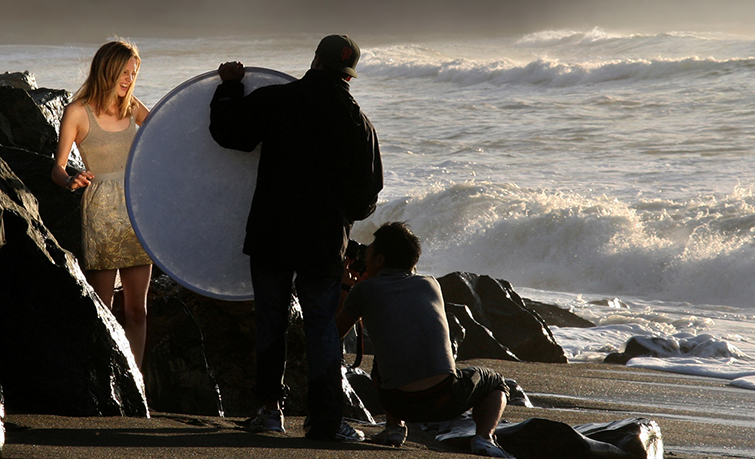
Image: Bounce light via Wikipedia
A bounce light, also known as a bounce, is a reflected light. You can use dedicated tools like silk or foam boards, or simply bounce the light off the wall or ceiling for endless possibilities.
Key Points:
- Foam bead boards create the softest bounce light with their matte surface.
- Reflectors with silver reflective material produce a hard light and bounce back about 3/4 of the intensity, depending on the distance.
- Bounced light from a reflector is versatile and can be used for key, fill, backlight, and even illuminating background objects.
Soft Light

Image: Her via Annapurna Pictures
Soft light refers to the size of the light source rather than its placement. It comes from a large source like a light fixture or diffusion sheet, resulting in soft shadows or even no shadows at all. For more tips on achieving soft lighting, check out this post.
Hard Light
Hard light creates sharp and harsh shadows. It can come from the midday sun or a small lighting source. In soft light, whether a light is soft or hard depends on the size of the source.
Key Points:
- Direct sunlight produces hard light and often needs to be diffused.
- A smaller light produces hard light, while a larger light produces soft light.
Here’s a comparison from a recent short film I worked on to demonstrate the difference between hard and soft light. We had to wait for the sun to go behind the clouds because the light was too harsh.

High Key
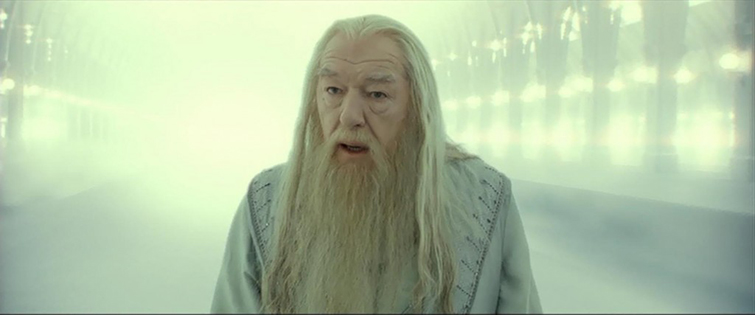
Image: Harry Potter and The Deathly Hallows Part 2 via Warner Bros.
High Key lighting is bright, shadowless, and filled with lots of fill light. It was popular in classic Hollywood comedies and musicals from the 1930s and 40s.
Today, high key lighting is commonly used in cosmetic commercials, sitcoms, and music videos. However, it still has its place in modern cinema, as seen in the image from Harry Potter above.
Key Points:
- High key lighting is shadowless.
- It can be close to overexposure in certain areas of the image.
- Frontal lighting is often used to achieve high key lighting.
- High key lighting has a low lighting ratio.
Low Key
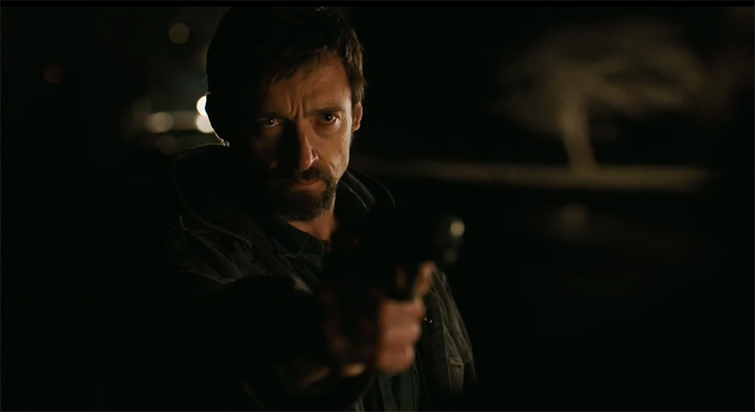
Image: Prisoners via Warner Bros.
Low key lighting creates a dark and shadow-filled atmosphere. It focuses on using shadows as a character rather than the subjects in the light. This technique is commonly used in horror and thriller films. For more on creating dramatic films with low key lighting, check out this article.
Here are some key points to keep in mind:
- Low key lighting can often be achieved with just one light.
- Low key lighting has a high lighting ratio.
- Using a hard light source works best for low key lighting.
Motivated Lighting

Image via Shutterstock
Motivated lighting is when the light in the scene imitates a natural source within the scene. It enhances and replicates practical lighting.
Here are some key points to remember:
- Establish the source of the motivated lighting early in the scene and within the production schedule itself. If your motivated source is a window, and the shoot runs into the evening while the story time remains in the day, you can increase and change lighting gels to match the earlier time.
- Make sure you have the correct gels to correct the color temperature to match the source of motivation.
- It’s important to have your light look and act the same as the apparent source. If the motivation is moonlight, and your light is producing hard light at 5600k, it’s not going to sell the scene.
Available Light
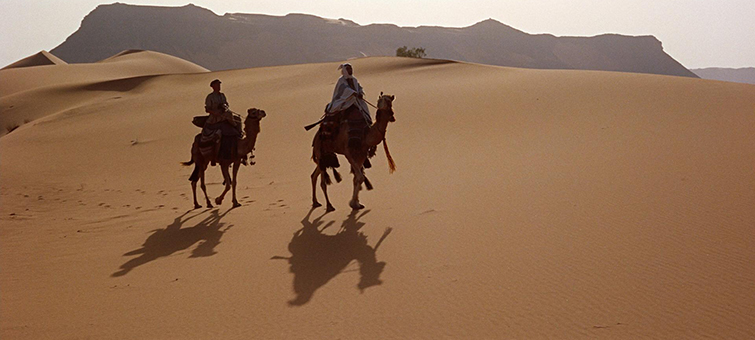
Image: Lawrence of Arabia via Columbia Pictures
Available light refers to what already exists at the location. It could be the sun itself in the Rub’ al Khali desert or street lights and store signs on a New York City street.
Here are some key points to keep in mind:
- If you’re using the sun as your lighting source, be sure to carefully plan for the weather and sun placement.
- Early morning and late evening are great times for soft golden lighting.
- Keep track of time, as the sun changes intensity and color quite quickly towards the later end of the day.
It’s very easy to read through this list and think that one definition could easily be another. That’s the beauty of it – they can be. One light placement term can very easily merge into a dozen other placements.
Take the image below from Man of Steel; it uses the computers as a practical light source and is the key light of the scene.
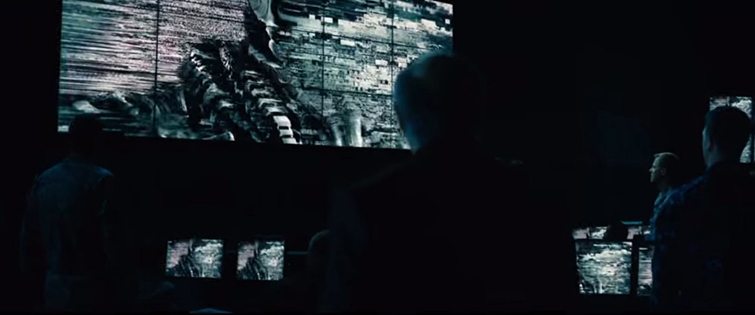
Image: Man of Steel via Warner Bros.
Books for Additional Reading:
Set Lighting Technician’s Handbook: Film Lighting Equipment, Practice, and Electrical Distribution by Harry Box
Cinematography: Theory and Practice: Image Making for Cinematographers and Directors 2nd Edition by Painting With Light by

Other Articles
After Effects and Chicken Parmigiana: An Unexpected Connection Revealed
SanDisk SSD Firmware Updates