Welcome to my review of the Asus PA279CRV 4K HDR 27” monitor (U$469) designed specifically for video editing and grading. Asus was kind enough to lend me this monitor for the purpose of this review, and I must say, it has exceeded my expectations. In fact, it is the closest I have ever come to finding the perfect monitor for this task, surpassing even the Apple Studio Display and the latest DreamColor model I reviewed. What sets the PA279CRV apart is its ability to function as a directly-attached monitor without the need for expensive third-party hardware. I am also grateful to the Asus representatives for their patience in addressing my geeky inquiries and suggestions for future firmware updates. But even without those updates, the Asus PA279CRV is truly a game-changer in this regard.
The Future of Video Grading and Editing Monitors
In my opinion, the following are the goals for video grading/editing monitors in the near future:
- Accurate contrast and color space that aligns with industry standards
- High-quality matte panel to minimize glare
- Support for 4K UHD resolution and lower spatial resolutions
- Compatibility with all desired DCI film and television rates
- Official support for rates via EDID to ensure proper cadence without third-party hardware
- Audio pass-through via HDMI for synchronized audio and video playback
Key Features of the Asus PA279CRV
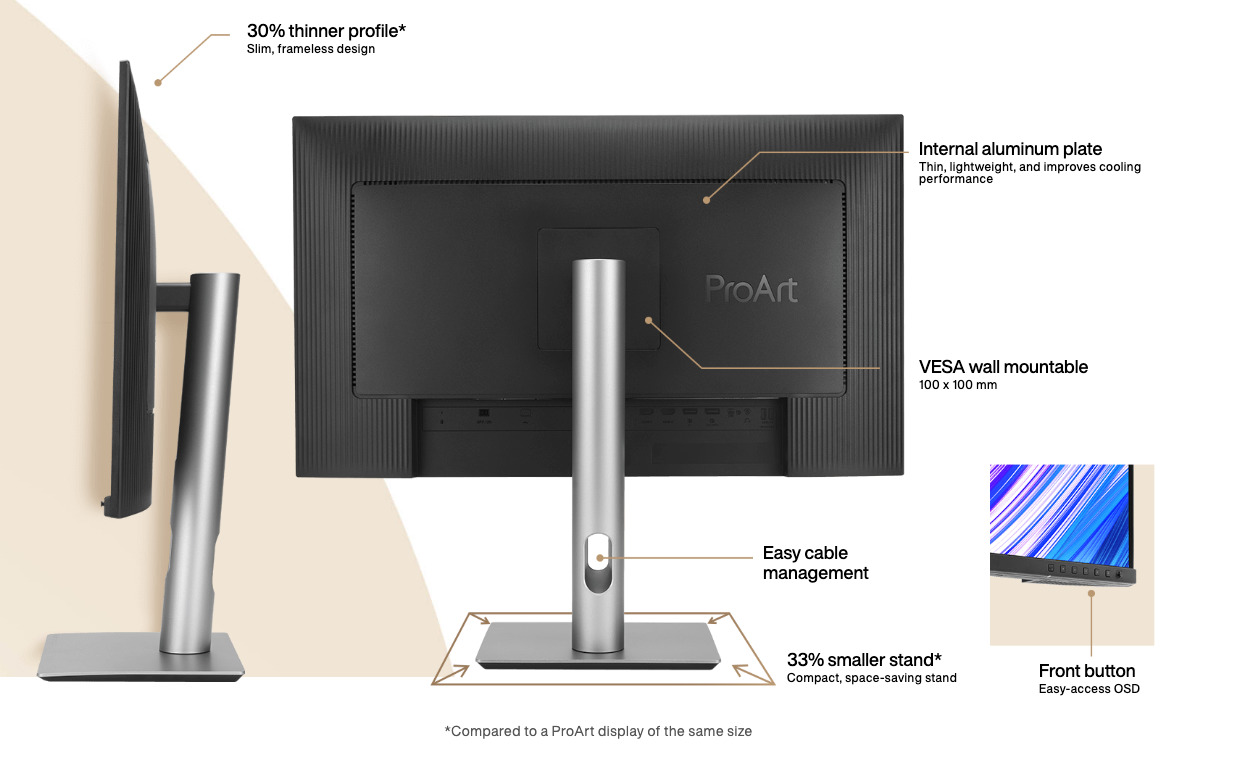
- 27″ 16:9 IPS Panel
- HDMI 2.0 | DisplayPort 1.4 | USB-C
- USB power delivery (96-watt via USB-C can even charge your laptop)
- Integrated USB Hub
- Multi-input support (PIP/PBP)
- 4K UHD 3840 x 2160 resolution at up to 60 Hz
- 99% DCI-P3 | 99% Adobe RGB
- Calman verified and factory pre-calibrated to Delta E < 2 color accuracy
- High-quality matte display to minimize glare
- TÜV Eye Care ASUS Flicker-free and ultra-low blue light
- Ergonomic design for comfortable viewing
- VESA 100×100 mm mount
- On-screen display/menus available in multiple languages
- Adaptive sync
- 5 ms (GtG) response time
- 1000:1 static contrast ratio
- 400 nits peak brightness
- 1.07 billion colors with HDR10
- Supports audio over HDMI for synchronized audio playback
- Supports all video and film rates officially
grading with any of the mentioned non-integer rates:
- 23.976 (aka «23.98»)
- 29.97
- 59.94
and want to view the material in its native cadence (who wouldn’t?), until Asus adds a firmware update to offer the non-integer rates via EDID, you can purchase a device like the U$125 UltraStudio Monitor 3G from Blackmagic. I have discussed this with Asus, who says that they are studying the issue.
Ratings
Build quality

Matte panel
HDMI digital audio passthrough to analog 3.5 mm
USB hub and power
Official support for all desired rates (without EDID) for DCI film and television
EDID offering for Mac computers running macOS

Image credits
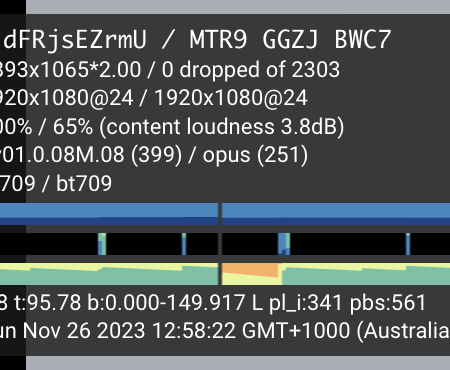
Except for the screenshot done by me, all images shown are courtesy of Asus.
Conclusions
For only U$469, the Asus PA279CRV 4K HDR ProArt Display is a much better value proposition than the HP DreamColor 4K Z27xunior» I reviewed in January 2022 (which cost U$674), since the the Asus PA279CRV 4K HDR ProArt Display. Unlike the HP DreamColor 4K Z27xs «junior», the Asus PA279CRV 4K HDR ProArt Display offers proper digital HDMI audio conversion to analog 3.5 mm jack and officially supports the full spectrum of rates required for film and television, although (as covered in great detail within the article), currently only offers some of those rates specifically over EDID when connected directly to an Apple Mac computer running macOS. However, even with that current limitation (which will hopefully be improved via a future firmware update from Asus), the the Asus PA279CRV 4K HDR ProArt Display is still an excellent value proposition. Within the article, I covered how to resolve that with an Apple Mac running macOS by using a device like the U$125 UltraStudio Monitor 3G from Blackmagic.