The world of AI is advancing at an incredible pace, with innovations like ChatGPT and DALL·E 2 making waves in countless fields. But what do filmmakers and other creative professionals really think about these developments? Are they worried about the end of thought leadership, or are they embracing the opportunities presented by these tools? PVC writers recently explored these questions in a conversation that took shape over email, and the answers are fascinating.
Jeff Foster, for one, is engaging with AI on a user level as much as possible, sorting out the useful from the useless noise and sharing his findings with the ProVideo community. But he also sees lines being crossed, with legitimate concerns about legal and ethical issues arising as AI image and animation generators become indistinguishable from reality. The question of whether people generating AI images in the style of noted artists or photographers are infringing on copyrights or simply mimicking published works is already being addressed in the legal system.
Brian Hallett, on the other hand, doesn’t see a sudden shift in the production process regarding AI and documentary filmmaking. He believes that the ability of a director or photographer to light a scene, light multi-camera interviews, and be with a subject through times of stress is irreplaceable. However, he does see AI slipping into the pre-production and post-production process, with any technology to make the process of collaborating and increasing the speed of the editing process being used to save production companies money.
Phil Rhodes also sees potential legal implications arising from the use of AI in documentary filmmaking, particularly when it comes to recreating scenes or influential people’s voices. He predicts a waterfall of new laws giving notable people intellectual property to a family member’s former image and voice, or at least 100 years of control of that image and voice. But he also believes that the legal system will eventually catch up and protect those who want it.
As the saying goes, with great power comes great responsibility. While AI tools can add a lot of value to the finished piece and make a huge difference in the production process, it’s important for professionals to keep in mind the potential legal and ethical concerns that come with using these technologies. The conversation is ongoing, and you can join in by leaving your thoughts in the comments section or on Twitter.The world of AI and its impact on creative professionals is a complex and knotty issue. While recent legal action has brought attention to the rights of AI-generated artwork, the fact is that interpreting the internal state of a trained AI is notoriously difficult. This lack of understanding makes it hard to explain why an AI made a certain decision, which is a major research topic. However, it’s reasonable to say that the trained state of an AI contains something of the essence of an artist’s work, and the artist should have rights in whatever that essence is.
The issue becomes even more complicated when an AI becomes capable of convincingly duplicating the style of an artist. While most jurisdictions do not allow people to copyright a style of artwork, the flood of images in that style can realistically begin to affect the original artist’s work. This is just one of many issues workers might have with AI, and the recent legal action might be seen as an early skirmish in what could be a significant war.
The impact of AI on employment is also a society-level issue that needs to be addressed. While less skilled work might go first, the mass unemployment caused by self-driving vehicles is a looming problem. Reasonable responses might include universal basic income, but that requires significant economic thinking. The idea that only certain, hard-to-automate professions have to get up and go to work in the morning is not likely to lead to a contented society.
While AI has a lot to offer and will cause significant change in our field and across society, it won’t cause broad, sweeping changes just yet. AI is imperfect and won’t totally replace humans at all the jobs we’re doing today. Many will be displaced, but we’ll get new jobs too. AI will certainly make it into consumer products, but to be part of a professional workflow, it’s got to be reliable and editable. The same amount of good work is being done by the same number of professionals, and there’s a lot more party invitations that look a little better.
In conclusion, the impact of AI on creative professionals is a complex issue that requires significant thought and consideration. While AI has a lot to offer, it’s not a perfect replacement for human creativity and expertise. As a species, we tend to be blindsided by technological advancements, but we must adapt and find a new normal. Some will succeed, and some will fail, but the world of AI and its impact on creative professionals is here to stay.Self-driving cars are a hot topic, but let’s face it, they still have a long way to go. My Tesla may be able to assist me while driving, but it still likes to brake for parked cars on bends. And until self-driving technology is perfect, it’s not worth the risk. Even a 99.9999% success rate isn’t enough if that 0.00001% chance of failure could result in someone’s death. While there have been some successes in controlled environments, a general solution is still a ways off. However, we may see self-driving trucks on predictable highway runs in the near future, which could put some people out of work. So what can we do? Stay agile and be ready for change. As William Gibson said, “The Future is Already Here, it’s Just Not Very Evenly Distributed.”
When it comes to AI audio tools, the possibilities are endless. There are so many options out there, from Accusonus ERA to Adobe Speech Enhancement, AI Mastering, AudioDenoise, Audo.ai, Auphonic, Descript, Dolby.io, Izotope RX, Krisp, Murf AI Studio, Veed.io, and AudioAlter. Personally, I’ve tested Accusonus ERA, Adobe Speech Enhancement, Auphonic, Descript, and Izotope RX6, and have written about them in ProVideo Coalition. But be wary of companies using “AI” as a marketing term. While there are some cool products out there, not all of them are worth the investment.
AI and machine learning tools offer some interesting possibilities, but they do have their flaws. For one, they suffer from biases, both from the developers and the available resources. And while AI can take A+B and create C or D and E, it can’t create K in the style of P and Q with a touch of Z without clear guidance. This is where artists come in, as they can make completely unexpected jumps in the thought process. So while AI can be a good assistant, it won’t be perfect. And there are certainly legal questions to consider, such as when an AI-generated image is considered an outright forgery.
In the world of film, we have a bit of breathing room when it comes to advances in AI. Our AI tools are largely technical rather than creative, and the creative ones are less well-developed compared to image and text creation tools. But for writers and artists, the sudden changes in the AI landscape can be challenging. Clients may ask to use ChatGPT to save money, or original writing may be falsely flagged as AI-generated by an AI analysis tool. There are real ethical issues to consider, but we can trust that creative people will always adapt. As for the legal side, there’s a lot of catching up to do, and it will be fascinating to see how current cases work out.The world of AI is evolving at a rapid pace, and it’s clear that we need to establish new legal precedents to deal with emerging AI tools. Take deepfakes, for example. While it’s impressive to see talented comedians like Charlie Hopkinson impersonate famous characters like Gandalf or Obi-Wan, it raises ethical concerns. What would Sir Ian McKellen think? Charlie puts a brief disclaimer on his videos, but that’s not enough. A permanent disclaimer watermark or signed permission from the owner of the face should be the bare minimum. YouTube has made some progress in this area, but more needs to be done.
As professionals in production and post, we need to keep an eye on all the changes happening so we can stay ahead and make them work to our advantage. I’m excited about the recent developments in AI, but I’m also cynical. I’ve seen exciting research that never sees the light of day. However, I’m not worried about AI from a professional standpoint until they can handle clients. If the chatbots I encounter are any indication, it’s going to be a while.
There are several areas in the crosshairs of AI, including text2image, music generation, speech generation, and deepfakes. These tools excite me most in the functional areas, taking painful things and reducing the difficulty. Good tools should always do that, especially when they leave the artist the ability to influence the guidance.
Generative AI isn’t “one-click.” As Iain pointed out, it did the job, but it wasn’t very good. The lack of being able to re-train will mean that failures will consistently fail. Then we’re in workaround hell.
Personally, I believe that AI technologies are going to cause massive disruption across all industries. It’s up to us to stay ahead of the curve and make the most of these changes.The course of evolution has been a wild ride, marked by exponential leaps like the Big Bang and the Industrial Revolution. And now, AI is poised to take us on another thrilling ride. It’s both exhilarating and terrifying, with plenty of risks and rewards. The question is, how can we position ourselves to thrive in this new era?
One strategy is to focus on what AI can’t do as well as humans. Billy Oppenheimer calls this “Taste and Discernment” – the ability to tell great stories, choose the right lighting and sound design, and connect with audiences on a human level. By using AI to create scenarios and relying on our own sense of taste to make the final decisions, we can stay ahead of the curve.
Of course, AI also raises some serious ethical and legal concerns. But there’s no turning back now – the genie is out of the bottle. So let’s work together to figure out how to harness this powerful tool to tell stories that speak to the human condition.
And while we’re at it, let’s keep the conversation going. Check out the latest AI tools and techniques in our Distribution and Post Production categories, and join the discussion in the comments or on Twitter.

Other Articles
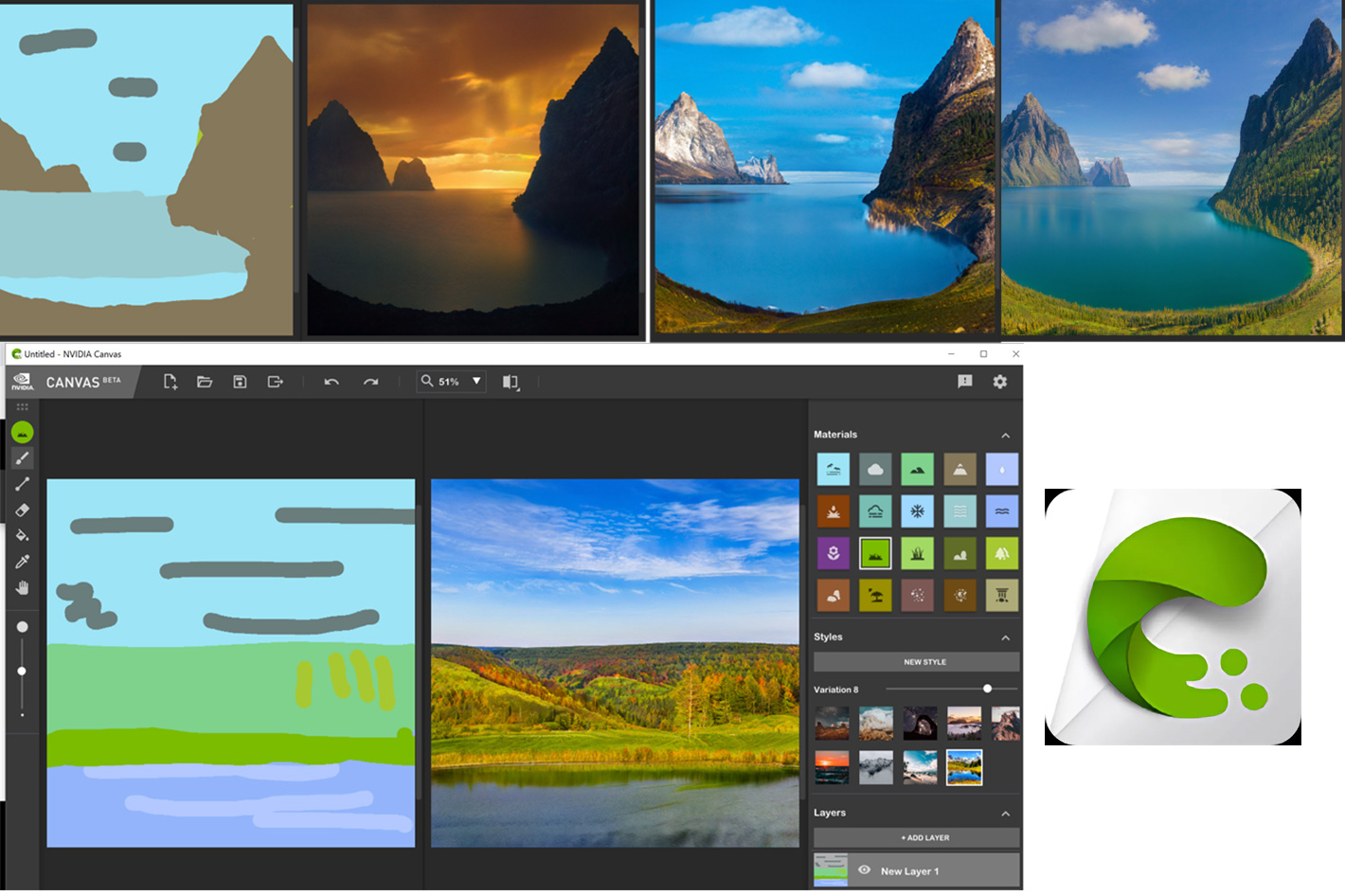
NVIDIA Canvas Utilizes AI to Generate Landscapes
Cannes to Host Global Virtual Production Summit