Are you a fan of science fiction films? If so, you know that starships are more than just a location – they’re dynamic set pieces that require a bit of forethought to design. But have you ever stopped to consider what goes into designing these Goliath vessels that lumber effortlessly through the cosmos?
In the 1950s, advances in lens technology and film stock changed how viewers experienced movies. But it wasn’t just the expansive landscapes of the “American West” that felt alien and not of this world. A similar living strangeness arose from the inanimate in science fiction films – starships. These vessels are stoic, implacable, and very much alive. They give their crews the breath of life, hold them while they sleep, and their mechanical hearts keep their many parts moving, fighting, and exploring.
In a science fiction film, the starship is more than just a location. It has an immediate effect on the lives and relationships of the crew that operates it. The relationship between a ship and its crew is almost parental, and what happens to the ship determines what happens to the story in the film.
Starship design is more than just some rocket engines and blinking lights. There are functional ideas and design aesthetics behind all of your favorite onscreen starships. So let’s take a look at what we know about starships and how some of the most famous came to be.
So what are the rules behind starship design? There aren’t any. Every ship you’ve ever fallen in love with on the screen was the result of a different designer’s inspiration. Starships usually make their appearances within the science fiction genre, but there isn’t just one “science fiction.” Different science fictions establish their own rules of operation, which means different ships have been designed to different levels of detail and operation.
However, there are a few conventions that you might find helpful. First, propulsion. The scope of your story will dictate how you approach propulsion. If your story spans the galaxy (or more), you have to incorporate some form of faster-than-light (FTL) travel. In Star Wars, it’s the “hyperdrive,” in Star Trek, it’s “warp speed,” and in Dune, psychic navigators use a magic spice called melange to predict the future and operate the “fold space drive.”
Starship design is a fascinating and complex topic, and we’ve only scratched the surface. But one thing is for sure – starships are more than just a location. They’re living, breathing characters that can make or break a science fiction film.
Are you ready to blast off into the cosmos? Before you do, you need to make sure your starship is up to snuff. After all, it’s not just a set piece – it’s critical to the story itself. That means its appearance will probably help advance that story, even if only subtly.
But don’t worry, you don’t need to be a rocket scientist to design a starship. Just remember that form follows function. If your story is contained to a more realistic scope, like the solar system in The Expanse, then you don’t need to be able to fold space and time — you just need very efficient engines that can get you around in a reasonable amount of time.
And speaking of engines, you’re going to need some form of sub-warp engines (even if you don’t also need warp engines). You can’t very well warp from Earth’s orbit to the moon’s, for example. It’s too close. That means you’ll need fuel, which is a good thing. A finite fuel supply can create a sense of urgency in your story. You could run out it, and, well . . . that would be a problem in the infinite darkness of space.
But what about gravity? Whether or not the occupants of your ship are subject to the laws of artificial gravity generally depends on the “realness” of your movie. But the very design of your ship depends on it. You have to decide if your ship is capable of planetary excursions — meaning it has to be strong enough to handle a trip through the atmosphere, and then it has to be structurally tough enough not to snap in half while under the effects of gravity.
And let’s not forget about the aesthetics. Wind resistance and aerodynamics aren’t a part of space travel. That means ships don’t need a shape that makes them faster the way jets do on Earth. Instead, their designs might try to do things like minimize their line-of-sight profile (for sneaky ships), maximize freight space while minimizing habitation (for cargo ships), or even just look intimidating.
So, are you ready to see some starships? From the rugged, lived-in look of the Millennium Falcon to the sleek, futuristic design of the USS Enterprise, Hollywood has given us some truly iconic starships. And now, armed with the knowledge of form following function, you can create your own starship that perfectly matches your story.Get ready to blast off into the world of starship design! When it comes to creating a spacecraft, there are a lot of factors to consider. You can’t just make it any shape you want, especially if you plan on landing on planets. Weight distribution, flight capability, and durability are all crucial elements to keep in mind. But don’t let that discourage you! By taking a closer look at some iconic starships from cinema history, we can see how their designs were used to enhance the stories they served.
First up, we have the U.S.S. Enterprise. This ship is a hallmark of cinema starship design, and for good reason. Its designer, Matt Jeffries, based his ideas in aeronautics rather than science fiction. Gene Roddenberry, the creative director, had some peculiar requests – no rocket engines, no fire, no smoke. But Jeffries rose to the challenge and created the famous roadster look with sweeping nacelles and a flattened saucer.
What makes the Enterprise’s design so unique is that it looks good from every angle. By adhering to the rule of thirds, Jeffries unintentionally created a ship that looks aggressive and futuristic no matter how you look at it.
Next, we have Discovery One from 2001: A Space Odyssey. This ship was developed in tandem by Stanley Kubrick and Arthur C. Clarke for both the novel and film adaptation. It’s a nuclear-powered, interplanetary spaceship with a rotating, moon-level gravity flywheel that contains the primary crew area.
One interesting difference between the ship design for the novel and the film is the cooling fins for the thermonuclear propulsion system. Clarke included them, giving the ship a dragonfly-like appearance. Kubrick, however, removed them because they looked like wings, which would suggest that the ship was capable of atmospheric flight.
Last but not least, we have the Event Horizon. This ship needs a closer look because it’s just so darn cool. Its design is both sleek and ominous, with a black exterior and sharp angles. It’s the perfect vessel for exploring the unknown depths of space.
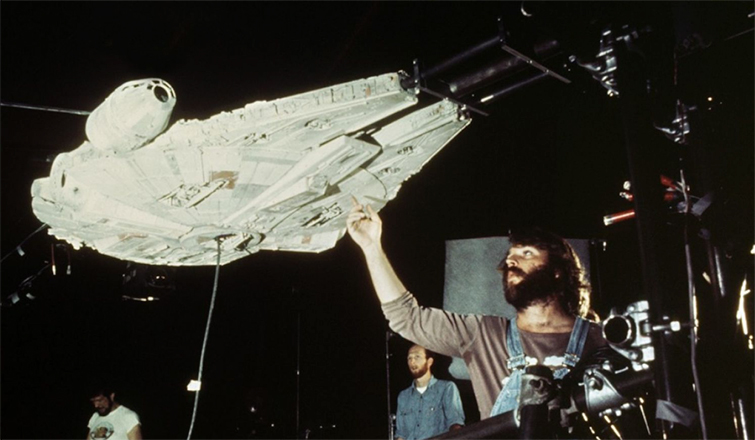
So, aspiring ship designers, take note. When it comes to creating a starship, form should always follow function. But that doesn’t mean you can’t make it look good too!Are you tired of scrolling through endless blocks of text? So are your readers! That’s why it’s important to include images and videos throughout your blog posts. But don’t just throw in any old image – mix it up and include ones that are only tangentially related to your topic. Take the Millennium Falcon, for example. We could go on and on about its design, but instead, we’ll just drop in a picture and the fact that it was inspired by WWII-era bombers. Easy peasy.
Now, let’s talk about the Event Horizon. This ship follows all the conventions of interstellar travel, but it’s also a cool-looking vessel that heavily influenced the story. Spoiler alert: the ship goes to hell and back. And where did the designers draw their inspiration? From none other than Notre Dame Cathedral. Look closely at the image – it’s a dark crucifix hanging in space. Form follows function, but it can also follow fiction.
Moving on to the Imperial Star Destroyer. This menacing space dagger was inspired by WWII-era naval vessels and aircraft carriers. Designer Colin Cantwell merged two different ship designs to create the iconic vessel we know and fear. And let’s not forget about the Borg Cube – one of the most fascinating ships in science fiction. Its design is both simple and complex, and it’s a testament to the power of collective intelligence.
So, next time you’re writing a blog post, remember to mix it up with engaging images and videos. And don’t be afraid to break the rules – sometimes, repeating an image or including one that’s only tangentially related can make all the difference. Happy writing!The Borg are one of the most menacing enemies in all of science fiction. They’re a living disease, a race of parasites that seize other living beings, augment them with technology, strip away their identities, and absorb their cultures into their collective consciousness. It’s the stuff of nightmares in the digital age, where we fear being subsumed and rendered voiceless by the technologies that seem to rule our lives. But the Borg have a ship that perfectly characterizes their worldview and how it relates to interstellar travel. And boy, is it a sight to behold.
The Borg Cube is unique among the unique. Just as the Borg themselves piece bodies together by seizing or salvaging others, a la Victor Frankenstein, so too do they build their ships this way. The Cube is an agglomeration of inter-connected elements pieced together entirely based on function. There is no ship design here—there are no aesthetics. There isn’t even a bow or a stern. This ship is all sides at once, and it can spring into motion in any direction. It’s the ultimate pack-rat ship, where the Borg simply add things onto other things until they become functional new…uh, things. Things like a nearly undefeatable starship.
The original concept is the brainchild of writer and producer Maurice Hurley, and the actual first design is the work of Richard James. Working on simple notes that suggested the ship would be cubical, Hurley and James were able to use the story of the Borg themselves in the visual design of their ship. Rarely is the union between a ship and its crew so plainly evident. It’s a horrifying monstrosity of a starship—an ingeniously conceived and constructed horrifying monstrosity.
So, what now? After you’ve designed your ship, it’s time to build it. You can either create a model, which has long been the tradition in science fiction filmmaking, or you can use 3D rendering applications to design it on your computer. Kitbashing is a great way to get your hands dirty and actually get a feel for your ship, even if you do plan to create a digital render. Having both will definitely help you cover all of your bases.
If you haven’t already written your script, that’s next. You’ll need to develop your story, then type up your script. Of course, you’ll spend plenty of time revising, right?
Now, with your film in hand, you’re ready to go to space. We’ve taken the liberty of rounding up the assets you’ll need to create your own believable version of outer space. First, grab this free pack of 40+ space assets. You’ll find all the bip and bobs you need to detail out your universe—things like starfields, nebulae, etc.
Next, you’re probably going to need some planets—they tend to come up in science fiction plotlines fairly often. We’ve prepped a tutorial for you on how to do this…
And that should just about do it. You know how ship design works, you know the importance of the narrative in the design process, and you know how to create a universe for your ship to navigate. Get out there, and show us what you’ve got!
Cover image via 20th Century Fox.
For more on all things space, check out these articles:
-The Space Western—Genre’s Unwanted, Weird Cousin
-SPACE KIT: Download 40+ Free Space Textures and Elements
-5 Tips for Taking Care of Your Lenses in Outer Space
-From the Moon to Galaxies Far, Far Away: Miniatures in Space

Other Articles

Is the Coming-of-Age Film Genre Declining?
Ranking the Top VR Movies Released to Date