Filmmaking is a wild ride full of challenges and problem-solving. It’s not just about using the right tools, but about taming the unruly beasts that we call movies. And when it comes to production, there’s always a moment when you need to get creative. Whether it’s a weird shot or some strange lighting, you have to figure out how to get the square peg into the round hole. And when those solutions work, they become the stuff of filmmaking legend.
In this round-up, we dive into The Vault of Great Films to explore four wildly different movies and see how beloved and infamous scenes came together despite their production challenges.
Let’s start with James Cameron’s legendary sequel to Alien, Aliens. Despite being underfunded and overly ambitious, Aliens went on to critical acclaim and was one of the highest-grossing films of 1986, cementing Cameron’s career. But, production wasn’t a cakewalk for the former art director. One standout challenge was the rigs for the intelligent guns. These beauties were constructed from German MG 42 machine guns, Steadicams, and motorcycle parts, and each one weighed between 65-70 pounds. So, what was the solution? Gaffer’s tape. Lots of it. Goldstein and Rolston had the harnesses taped to their torsos to keep the awkward rigs from falling off.
Next up, we have Ghostbusters, one of the most beloved comedies of the ’80s. Dan Aykroyd’s family had a long tradition of the occult and the arcane, which inspired the earliest drafts of the film. Despite several hurdles and speedbumps on the way to production, Ghostbusters really came to life when Ivan Reitman came on board. The two comics retired to a cabin for a couple of weeks, hammered out the script, and got a green light for the sturdy production budget of $25 million. Ghostbusters was unique at the time, being a comedy filled with special effects, which was unheard of. But with the help of Boss Film Studios, they pulled off their ambitious script in just ten months.
One of the most memorable scenes in Ghostbusters is the famous card catalog scene. Behind each open drawer is somebody blowing through a straw to make the cards fly out. And when it came to filming Slimer, the cheery little gourmand, they had to get creative. A team of puppeteers wiggled his face about, and he was worn as a hat by his primary puppeteer. But with so many people involved, he couldn’t move around. So, they moved the camera instead, zooming it back and forth to reverse-engineer the movements they needed for the little ghost.
When it comes to filmmaking, there’s no one-size-fits-all solution. But one thing is for sure: when in doubt, don’t over-complicate things. Use tape. Lots of it.Possible.
The Exorcist
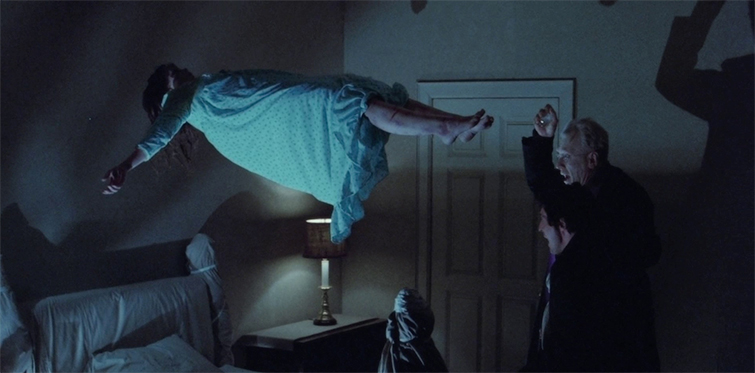
Prepare to be terrified. The Exorcist is not just a horror movie, it’s a cursed masterpiece. The marketing campaign alone was enough to make people believe that watching it could lead to demonic possession. And with good reason. The film is based on true events and the demon who possesses Regan is an actual demon from modern-day Iraq. Even the pope acknowledged the importance of demonology in Catholic doctrine. But the real horror didn’t stop there. The production was plagued with deaths, fires, and even an actual murderer on set. The crew was so tense that they had to call in a Catholic priest to bless the film. And the cast suffered injuries that were all too real. Linda Blair had to be protected by bodyguards because some viewers believed she was actually possessed. This film will scare you to your core, but it’s also a lesson in the importance of safety on set.
But before The Exorcist there was Flight of the Navigator. This sci-fi classic is a cult favorite that brings together Disney fans and science fiction fans alike. It was a groundbreaking film that featured an entirely electronic soundtrack and significant use of CGI effects. The iconic spaceship, the Trimaxion Drone Ship, was brought to life using image-based lighting and morphing, and the chrome surface was simulated using reflection mapping. Director Randal Kleiser’s brother, Jeff Kleiser, was a pioneer in this field and brought his expertise to the film.

But even this beloved film had its production challenges. The spaceship had to be built in two full-size versions, and the crew had to use innovative techniques to bring it to life. The film was a pioneer in the use of CGI effects, and the production team had to overcome many obstacles to make it work. But they did, and the result is a timeless classic that continues to inspire new generations of fans.
If you’re a fan of science fiction, you owe it to yourself to watch Flight of the Navigator. It’s a cult classic that broke new ground in filmmaking and inspired a generation of fans. From its iconic spaceship to its electronic soundtrack, this film is a masterpiece of science fiction cinema. But even the best films have their production challenges, and Flight of the Navigator was no exception. The crew had to use innovative techniques to bring the spaceship to life, and the film was a pioneer in the use of CGI effects. But they did it, and the result is a timeless classic that continues to inspire new generations of fans.
Get ready to be blown away by the practical effects used in Flight of the Navigator! While Captain Disillusion can handle the CGI innovations, we’re here to talk about the real creativity behind the spaceship. Two life-sized versions of the ship were built from a fiberglass mold in California and shipped to Florida for filming. One was solid and the other was hollow, allowing our hero to climb in and out of the aluminum-dressed interior. But how do you make the ships float? The answer lies in clever cinematography and some nifty tricks. By using the curvature of the hill and the ship’s belly, the filmmakers were able to hide the bulk of the machine just out of sight. And when they couldn’t use this trick, they built on what they’d already sold us. These magnificent ships are icons of creative filmmaking at a time when CGI was still in its infancy. So go forth and innovate, but don’t forget to take care of your cast and crew. For more on filmmaking, check out our other articles.

Other Articles
Exploring the Intriguing Realm of Frame Rates
PVC News Staff Announces Audio Design Desk at NAB 2023