Imagine this: After Effects and Chicken Parmigiana. Two seemingly unrelated things, right? Well, bear with me because I’m about to make a connection that might just blow your mind.
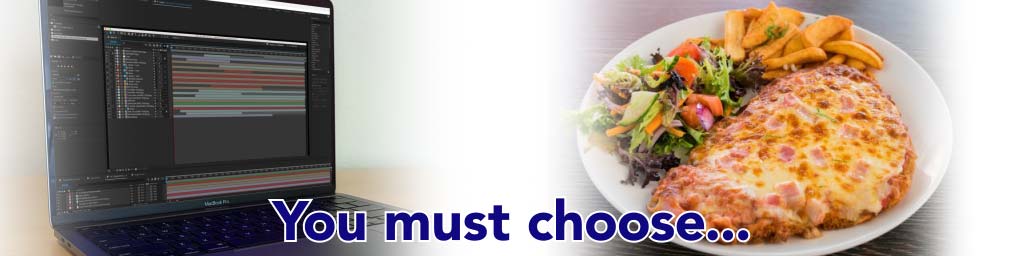
Let’s start with a little story. Have you ever stumbled upon an article online that resonated with you so deeply, but then you couldn’t find it again no matter how hard you tried? Frustrating, right? Well, that’s exactly what happened to me. I read an article a while back that explored the failure rate of restaurants, and it left a lasting impression on me.
You see, restaurants have a notorious reputation for being risky investments. Most new ones don’t make it past their first year. In fact, when I started my own business, I received a brochure that explicitly warned against opening a restaurant. They emphasized the high failure rate. But here’s the interesting part: that article I can’t find again revealed that the failure rate of restaurants has been increasing over time. It got me thinking, why is this happening?
As I delved deeper into the article, I couldn’t help but draw parallels between the challenges faced by the restaurant industry and our very own motion graphics and visual effects industry. Both are creative fields that require passion and dedication. And just like aspiring restaurateurs, motion designers and VFX artists face their own set of obstacles.
Let’s take a closer look at what the article uncovered. It turns out that many restaurants fail because their founders get caught up in the allure of joining a global foodie culture. They want to be part of something bigger, something grand. But here’s the catch: while they’re dreaming of creating culinary masterpieces that will impress the world, the average customer just wants a simple, affordable meal.
In the past, restaurants were considered fancy if they baked their own bread. But with the rise of globalization and the internet, the world has become a smaller place. Foodies from all corners of the globe can now connect and share their love for food online. Countless recipe sites, YouTube channels, and food blogs have sprung up, creating a massive worldwide foodie culture. And let’s not forget the impact of Instagram, where every dish is meticulously documented and shared.
This global foodie culture has inadvertently put pressure on aspiring restaurateurs. They’re bombarded with images of mouthwatering dishes and innovative culinary creations. They feel the need to stand out, to be unique. A simple chicken parmigiana just won’t cut it anymore.
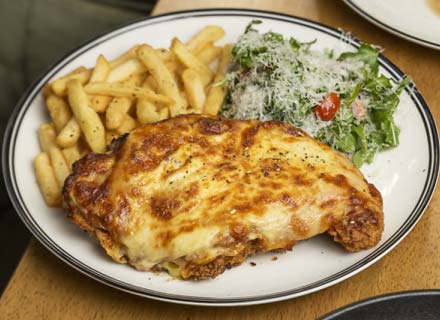
So what do they do? They go all out. They source the finest ingredients, from organic, free-range chicken to artisanal bread. They strive for perfection in every aspect of their dishes, from the homemade ham to the locally-sourced cheese. They want to create an experience that goes beyond just a meal.
Now, you might be wondering, what does all of this have to do with After Effects? Well, think about it. Just like those passionate restaurateurs, motion designers and VFX artists are driven by their love for their craft. They want to create something extraordinary, something that will leave a lasting impression. But in a world where trends change at the speed of light and social media sets the bar impossibly high, the pressure to stand out can be overwhelming.
So, the next time you’re working on an After Effects project or sitting down to enjoy a delicious chicken parmigiana, remember this: both require passion, dedication, and the ability to navigate a world that constantly demands innovation. They may seem different on the surface, but deep down, they share a common struggle.
Pub Grub and Pixel Pushing
Now, let’s dive deeper into what those authors discovered about the restaurant industry.
According to their research, many restaurants fail because their founders get caught up in the global foodie movement. They want to be part of something bigger, something grand. But here’s the thing: while they’re dreaming of creating culinary masterpieces that will impress the world, the average customer just wants something cheap and simple to eat.
In the past, restaurants were considered posh if they baked their own bread. But with the rise of globalization and the internet, the world has become a smaller place. Foodies from all corners of the globe can now connect and share their love for food online. There’s an endless supply of recipes, cooking shows, and food blogs to satisfy every craving. And let’s not forget the impact of Instagram, where every dish is meticulously documented and shared.
This global foodie culture has inadvertently put pressure on aspiring restaurateurs. They’re bombarded with images of mouthwatering dishes and innovative culinary creations. They feel the need to stand out, to be unique. A simple chicken parmigiana just won’t cut it anymore.
So, they go all out. They source the finest ingredients, experiment with exotic flavors, and create elaborate presentations. They want to create an experience that goes beyond just a meal.
Yes Chef!
Now, you might be wondering, what does all of this have to do with After Effects? Well, think about it. Just like those passionate restaurateurs, motion designers and VFX artists are driven by their love for their craft. They want to create something extraordinary, something that will leave a lasting impression. But in a world where trends change at the speed of light and social media sets the bar impossibly high, the pressure to stand out can be overwhelming.
So, the next time you’re working on an After Effects project or sitting down to enjoy a delicious chicken parmigiana, remember this: both require passion, dedication, and the ability to navigate a world that constantly demands innovation. They may seem different on the surface, but deep down, they share a common struggle.
Imagine walking into a restaurant that prides itself on using only the finest ingredients. The chefs use oil that they’ve pressed themselves, on an antique olive press they restored, and garnish everything with micro herbs from their own garden. It sounds like a culinary masterpiece, doesn’t it? The kind of place that would make your taste buds dance and your Instagram followers drool.
But here’s the catch. If the owners of this restaurant actually sat down and calculated how much it cost them to make that chicken parma, they would realize they need to sell it for $60 just to break even. As much as I love a good chicken parmigiana, I simply can’t afford to shell out $60 on a regular basis. Even a $20 lunch special at a local pub is hard to justify every day.
The restaurant owners are either unaware of the true cost of their food, or they’re setting their prices based on what other restaurants are charging, or maybe they’re just making up prices to please their customers. Either way, their gourmet chicken parma ends up on the menu for $40.
But here’s the problem: the average person who just wants a $20 pub lunch doesn’t care about triple-cooked fries or cheese from a water buffalo. They just want a chicken parma, and they certainly don’t expect it to cost $40.
So the restaurant is either losing customers who think the prices are too high, or when they do have customers, they’re losing money because the meals they sell are costing them more than they’re charging. Eventually, they’ll have to close down.
This restaurant failed because they over-delivered and under-charged. They fell victim to the influence of social media, thinking that they needed to go above and beyond to attract customers. But in reality, their customer base couldn’t support the high costs of running the restaurant.
Now, let’s talk about your work as a digital artist. I’m sure you’ve noticed the buzz surrounding AI tools and how they’re supposedly going to revolutionize your job. But let’s be honest, those clickbait articles promising to reveal “10 things you need to know” about AI are just noise.
Sure, AI tools may have some impact on the industry, but talking to actual professionals in the field tells a different story. Maybe the real threat to digital artists is the mental burden created by constantly comparing ourselves to others on social media. The imposter syndrome fueled by an endless stream of beautiful artwork from seemingly more talented artists.
But here’s the thing: the digital art industry is much larger than the small pool of exceptional work that gets shared and admired online. Just like the food industry, there’s room for fine dining and fast-food outlets. Canva, for example, recognized the market for simple, accessible design and found great success.
So, for every motion designer working on a Hollywood title sequence, there are countless others creating website banners, in-store promotions, and training videos. And that’s perfectly okay. You don’t need to constantly learn new software or feel pressured to keep up with the latest trends. Focus on what pays the bills and what your clients actually need.
Restaurants are feeling pressured to do it all, from baking bread to growing vegetables. Similarly, digital artists may feel pressured to learn every new tool and technique out there. But just like a restaurant chef doesn’t need to roll their own pasta, you don’t need to master every software in the industry.
Don’t let the constant stream of exceptional work on social media make you feel inadequate. Remember that it doesn’t reflect the true supply and demand of the overall industry. Take a step back, focus on your own skills and expertise, and don’t be afraid to ignore the noise.The digital art industry is facing a unique threat, and it’s not from AI taking over our jobs. While some may believe that AI will revolutionize our work, I personally don’t buy into the hype. I’d rather not waste my time reading about the “10 things I need to know” about AI.
The real danger to studios and artists lies in undercharging and over-delivering. There’s a perception that everyone else out there is producing incredible work with amazing tools and achieving incredible success. This mindset can be toxic, making us doubt our own abilities and value.
So, ask yourself, are you a $60 chicken parmigiana? There’s nothing wrong with being a $60 parma, but if you’re selling yourself short at $40 and still feeling guilty about being too expensive, then there’s a problem.
But enough pondering for now. I’m heading to the pub for lunch, and I already know what I’m going to order.

Other Articles
Part I: Custom Video Clip Utilizes 3D Object Tracking Technology
Lighting 101: A Quick Guide for Film Lighting