Are you a Marvel fan? Have you ever wondered which camera was used to capture your favorite superhero moments? Well, wonder no more! We’ve taken a deep dive into the production process of the Marvel Cinematic Universe (MCU) and explored the cameras used in each phase. In this article, we’ll focus on Phase One (2008-2012), which includes iconic films like Iron Man and The Avengers.
Join us as we explore the camera packages used in each Phase One film. From the Arriflex 235 to the Panavision Primo, we’ll take a closer look at the equipment that brought these superheroes to life. And don’t worry, we’ll also cover Phase Two and Three, as well as upcoming Phase Four Marvel films in the following days.
So, let’s get started with Phase One and see what we can learn about the cameras and lenses behind the MCU. “Avengers assemble!”Get ready to geek out over the cameras and lenses used in the Marvel Cinematic Universe (Phase One)! From Iron Man 2’s Panavision Panaflex Millennium XL2 to Thor’s Photo-Sonics 4ER, each film had its own unique camera package. And let’s not forget about the lenses – Angenieux Optimo Lenses, Panavision Primo, and Canon lenses were just a few of the options used. But it’s not just about the equipment – the second unit for Iron Man 2 even used Canon EOS 5D Mark II DSLRs as crash cameras! And for Captain America: The First Avenger, the pre-visualization process was taken to the next level with a “techviz” that helped determine the necessary equipment for each shot. So next time you watch a Marvel movie, take a moment to appreciate the behind-the-scenes work that went into capturing those epic moments on camera.
Get ready to dive into the world of Marvel Cinematic Universe! In a conversation with British Cinematographer, Shelly Johnson revealed how he and Joe Johnston managed to strike a balance between a period look and a realistic feel for the superhero movie, The First Avenger: Captain America. They took certain liberties to accommodate the comic book superhero’s costume, face mask, and shield, while also integrating visual components that are true to the period.
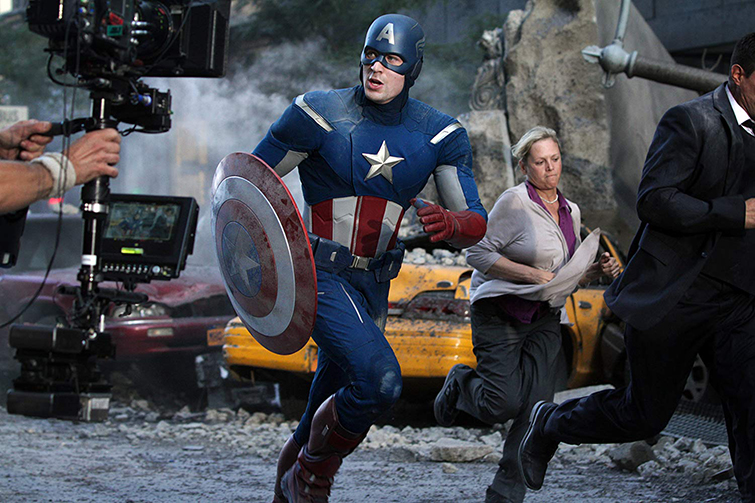
Image via Marvel Studios.
Fast forward to The Avengers
Directed by Joss Whedon and shot by Seamus McGarvey, The Avengers was a visual treat for Marvel fans. The team wanted to avoid a comic book look and instead aimed for a naturalistic quality to the image. They used Steadicam, cranes, and dollies to create kinetic images and chose dramatic angles to capture the heroic imagery. McGarvey even refuted the rumor that a portion of the movie was shot on an iPhone.

Image via Marvel Studios.
For more insights into the making of The Avengers, check out 6 Filmmaking Takeaways from the Set of The Avengers and Avengers Assembled: Editing a Blockbuster.
That concludes Phase One of the Marvel Cinematic Universe. But don’t worry, there’s more to come! Check out Parts Two and Three for a summary of the cameras most often used on Marvel films.
- The Cameras and Lenses Behind the Marvel Cinematic Universe: Phase Two
- The Cameras and Lenses Behind the Marvel Cinematic Universe: Phase Three
Looking for more articles on the filmmaking industry? Check out these must-reads:
- Breakout Director Kat Candler on the Best Festivals for First-Time Filmmakers
- NAB 2019: Our Favorite Releases from This Year’s Show
- Industry Insights: A Conversation with Actor and Director Melanie Mayron
- Industry Insights: Below the Line Women Speak Out
- Industry Insights: The Blasting Company on Animation Scoring